A desk mat is more than a surface upgrade, it’s the foundation of a workspace that feels intentional.
The right material changes how your mouse moves. The right size shapes how organized your desk looks. And the right features quietly enhance comfort, protect your gear, and add a layer of visual clarity.
In this guide, we break down the essentials: the materials that age well, the sizes that actually work, and the functional details that make a desk mat worth investing in.
Materials
Leather / Vegan Leather
Leather desk mats bring a refined, tactile surface that feels substantial under your hands. They’re easy to wipe clean and develop character over time without looking worn. Vegan leather offers a similar look and feel with easier maintenance and often at a more accessible price point.
Felt / Wool Blend
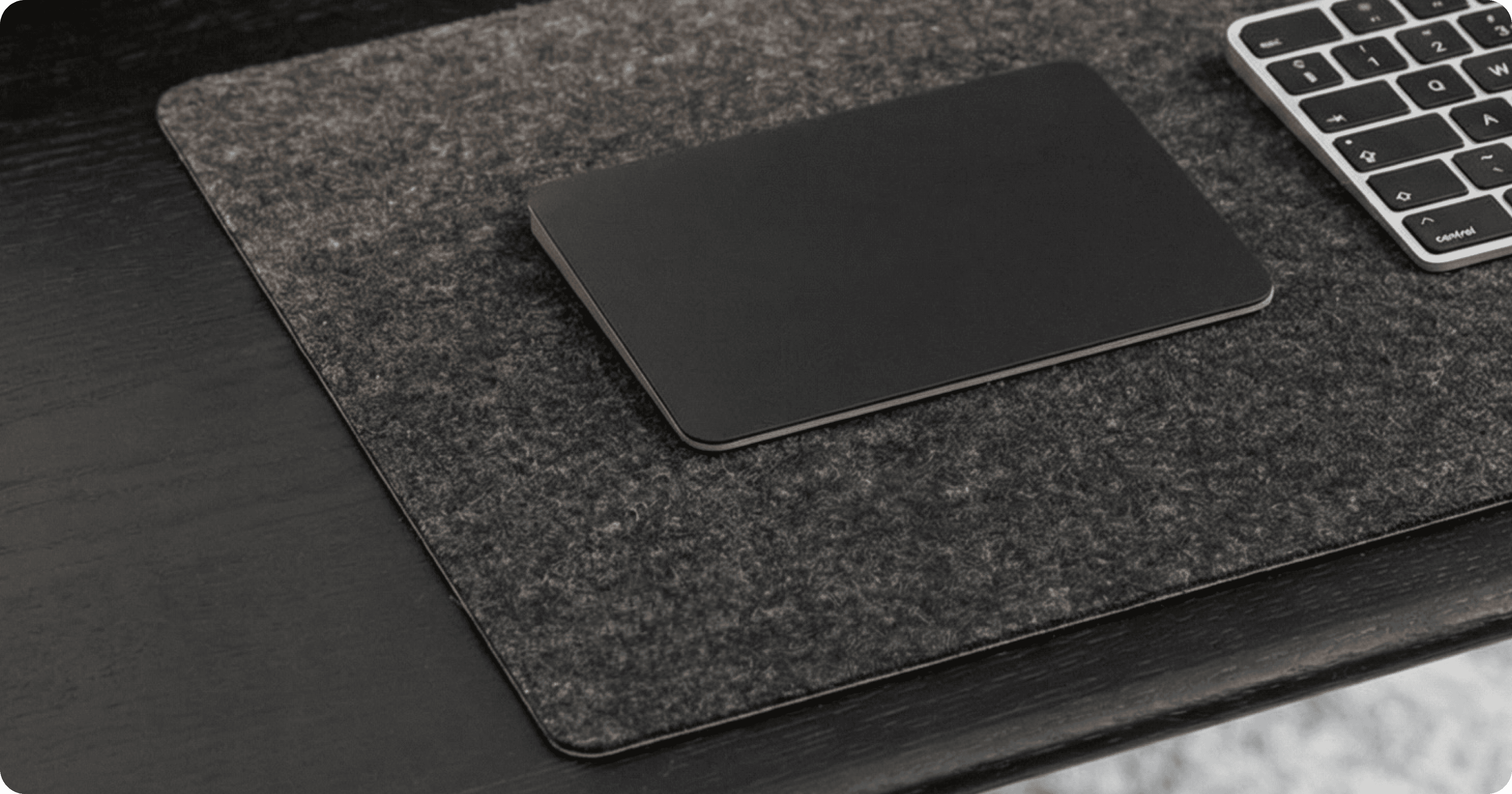
Felt introduces softness and warmth to a workspace. Its slightly textured surface absorbs noise and creates a calmer visual field. Felt mats work well in setups where comfort and a cozy aesthetic are priorities, but they do require occasional cleaning and care.
Silicone / Soft Rubber
Silicone and soft rubber mats are practical and minimalist. They’re resistant to spills, easy to wipe down, and provide a uniform feel across the surface. The subtle matte finish complements modern or monochrome desks and offers reliable traction for both mouse and accessories.
Size
The size of a desk mat should be considered as part of your workspace architecture. The right dimensions help anchor your setup visually and practically.
Small (60–70 cm / 24–28 inches)

A compact option that fits minimalist setups or desks with limited surface area. It’s ideal if you only need space for your keyboard and mouse, leaving the surrounding desk visible.
Medium (80–90 cm / 31–35 inches)

This is the most versatile size for standard setups. It provides enough coverage to unify your primary tools. Keyboard, mouse, and a bit of peripheral space, without crowding your desk.
Large (90–100+ cm / 35–39+ inches)

A large desk pad creates a continuous surface that visually ties your entire workspace together. These sizes are perfect for multi-monitor setups or for those who like a cohesive, uninterrupted base. A large pad also protects more of your desk from scratches and spills.
Function
Beyond materials and size, certain features subtly shape how you use your desk mat, often without you noticing at first, until you have them.
Anti-Slip Backing
Ensures your mat stays firm and stable, even during intense typing or gaming sessions. A secure base prevents shifting and keeps your setup consistent.
Water-Resistant or Easy-Clean Finish
Desk pads that repel liquids or are easy to wipe down help protect your surface from daily mishaps, coffee, tea, or ink, without degrading the aesthetic.
Slight Cushioning
A gently cushioned pad reduces fatigue during long work sessions. It also provides a soft, premium feel that enhances comfort for wrists and hands.
Dual-Sided or Modular Designs
Some mats offer reversible surfaces or sections that can be swapped out depending on task or aesthetic preference. This flexibility keeps your workspace adaptable.
Straight or Finished Edges
Clean edges contribute to a refined look and prevent fraying over time. For many, edge quality becomes a hallmark of overall desk mat craftsmanship.
Suggested Picks
Here are a few curated desk mat suggestions to help you find the right fit for your workspace.
A desk mat may seem like a small detail, but it’s often the first layer that defines how your workspace feels and functions. The right choice brings order to visual chaos, protects the tools you rely on, and adds a quiet sense of refinement to your daily workflow.
For more tips, inspiration, and setup ideas, follow us on Instagram, Threads, and Pinterest.